|
Continued...
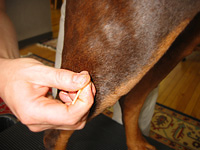 Uses of acupuncture
In the western world, acupuncture is most commonly used for the treatment of painful conditions, especially those that are chronic and unresponsive to surgery or medications. However, it can be used to treat many other conditions.
Acupuncture is helpful after an injury or surgery to decrease pain and aid in healing. It has been successfully used to treat patients with intervertebral disc disease affecting the neck or back, often helping the nervous system heal so the patient can regain use of weak or paralyzed legs and to relieve pain.
Pets with skin problems, heart disease, kidney disease, and digestive problems (vomiting, diarrhea, ulcers, etc.) often show a good response to acupuncture treatment.Certain behavior or psychological problems can be helped as well. It should not be forgotten that in China, TCM is used to maintain good health; it is not just used to treat diseases. In fact, TCM doctors of centuries past were not paid if their patients got sick. Their job was to detect imbalances in the body in the early stages and rebalance the system to avoid the disease conditions.
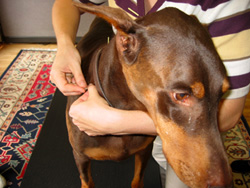 Therefore, acupuncture can be helpful for maintaining good health or can be used to help patients with subtle symptoms, even if there is no diagnosis for these symptoms in conventional western medicine. This may occur when there isn't a western disease condition yet, rather the body is at the stage where the imbalances are just beginning. If left untreated, these imbalances can progress to a recognizable disease, or continue to be chronic, mild symptoms.
Acupuncture can also be used for severe problems when all other types of treatment have been tried and the body may be too weak to take any more medications or undergo surgery. It is always best, however, to treat any condition as early as possible, regardless of the therapy used.
Advantages of using acupuncture/TCM
TCM offers a different way of looking at the body, putting emphasis on history and physical examination findings. 2,000 years ago doctors did not have x-rays or laboratory tests to diagnose problems in the body. For many centuries, doctors had to rely on their examination of the patient to make a diagnosis and develop a plan for treatment. They examined the tongue, pulse and acupoints in addition to what we do in a modern physical examination in order to gain enough information.
Therefore, TCM offers a non-invasive diagnostic option when conventional medicine doesn't yield a diagnosis or as a way to gain additional information. Acupuncture offers an option when a patient cannot take medications or undergo surgery, or when conventional medicine has no effective treatment to offer, as is the case with many chronic diseases.
Best of all, acupuncture also offers a way to maintain a state of balance and health

|